When the Ordinary Becomes Luxury
Food prices are rising, “everyday” ingredients are becoming precious, and a bottle of vinegar can suddenly feel like a time machine.
What does a feast mean to you?
Maybe it’s a table covered in dishes you only eat once a year. Maybe it’s a special meal out — expensive, celebratory, photogenic. Maybe it’s simply one perfect thing you can only get in one particular place, and nowhere else tastes the same.
Now flip that thought.
What about the foods you eat every day — the ingredients so familiar they barely register? The rice you scoop without thinking. The fish you associate with a season. The condiments you keep buying out of habit, because they’re always been there.
What if, one day, those quiet, ordinary ingredients become luxury items?
This isn’t a far-off dystopian thought experiment. It’s already happening. Food prices are rising across the world, and Japan is no exception. In recent years, ingredient costs have climbed dramatically, and in some cases nearly doubled. Staples are shifting categories — from “normal” to “special,” from “everyday” to “only sometimes.”
Take rice, the backbone of Japanese cuisine. For generations, it has been the dependable constant — the thing you build meals around. But rice has become significantly more expensive compared to just a few years ago. The numbers vary by region and season, but the direction is the same: upward.
Or take Pacific saury (sanma), that classic autumn delicacy that tastes like the first cool evenings. Saury prices have surged even more dramatically, with a combination of forces pushing it out of reach for many households:
- shifts in habitat linked to global warming
- declines in plankton and changes in ocean ecosystems
- large-scale fishing by other countries before the fish reach Japanese waters
The fish hasn’t “changed.” The experience hasn’t. But what used to be common has become precious — and suddenly, you’re eating memory as much as dinner.
And it’s not just rice and saury. Plenty of ingredients are quietly making the same journey: from staple to treat, from background to spotlight. The ordinary is turning into a luxury in slow motion.
So What Counts as “Everyday” Now?
If affordability defines what feels “normal,” then today’s everyday foods often look like a very specific kind of convenience:
- frozen imported items
- processed meals designed to be quick and cheap
- ingredient labels that read like tiny novels in fine print
Food that is efficient, shelf-stable, engineered for distribution — and often far removed from seasonality, locality, or craft.
At the same time, there’s a strange and growing gap between what looks like luxury and what is actually expensive.
Living in a rural town surrounded by nature changes the equation. Fresh vegetables and fish can cost a fraction of city prices. Ingredients that feel like splurges elsewhere can still feel like daily life here. To someone busy, time-poor, and constantly rushing, a meal cooked slowly with seasonal produce and traditional methods might look like fine dining.
But it isn’t always “luxury.” Sometimes it’s simply proximity — being closer to the source, and therefore less exposed to the markup.
In that sense, the definition of “luxury” becomes weirdly geographical.
Restaurants Are Being Forced to Choose
The restaurant world has been squeezed from both sides: rising ingredient costs and customers with shrinking budgets. Many places have closed. Those that remain are often caught in a dilemma that feels impossible to solve:
- raise prices and risk losing regulars
- keep prices low and risk not surviving at all
Some restaurants now lean into inbound tourism, offering premium ingredients and high-end pricing. For visitors, it can feel like a once-in-a-lifetime experience. For locals, it can feel like watching your own city become a showroom you can’t afford to enter.
Others use a different strategy: volume-for-value. Oversized portions. Giant plates. The psychology of “at least I’m getting a lot.” It works — because quantity can temporarily soothe the pain of price increases.
But it also raises a question that feels bigger than restaurants:
Are we mistaking quantity for value?
In uncertain times, it becomes worth asking something deeper than “what’s cheap?” or “what’s expensive?”
What is food actually worth?
Not in a moralistic way. In a real way — the cost of time, skill, care, land, water, and human attention. The cost of not cutting corners. The cost of making something properly.
Red Vinegar and the Reversal of Value
While exploring Japan’s food culture, condiments have become the most surprising gateway: soy sauce, miso, vinegar. These aren’t just “seasonings.” They’re concentrated history. They’re craft in liquid form.
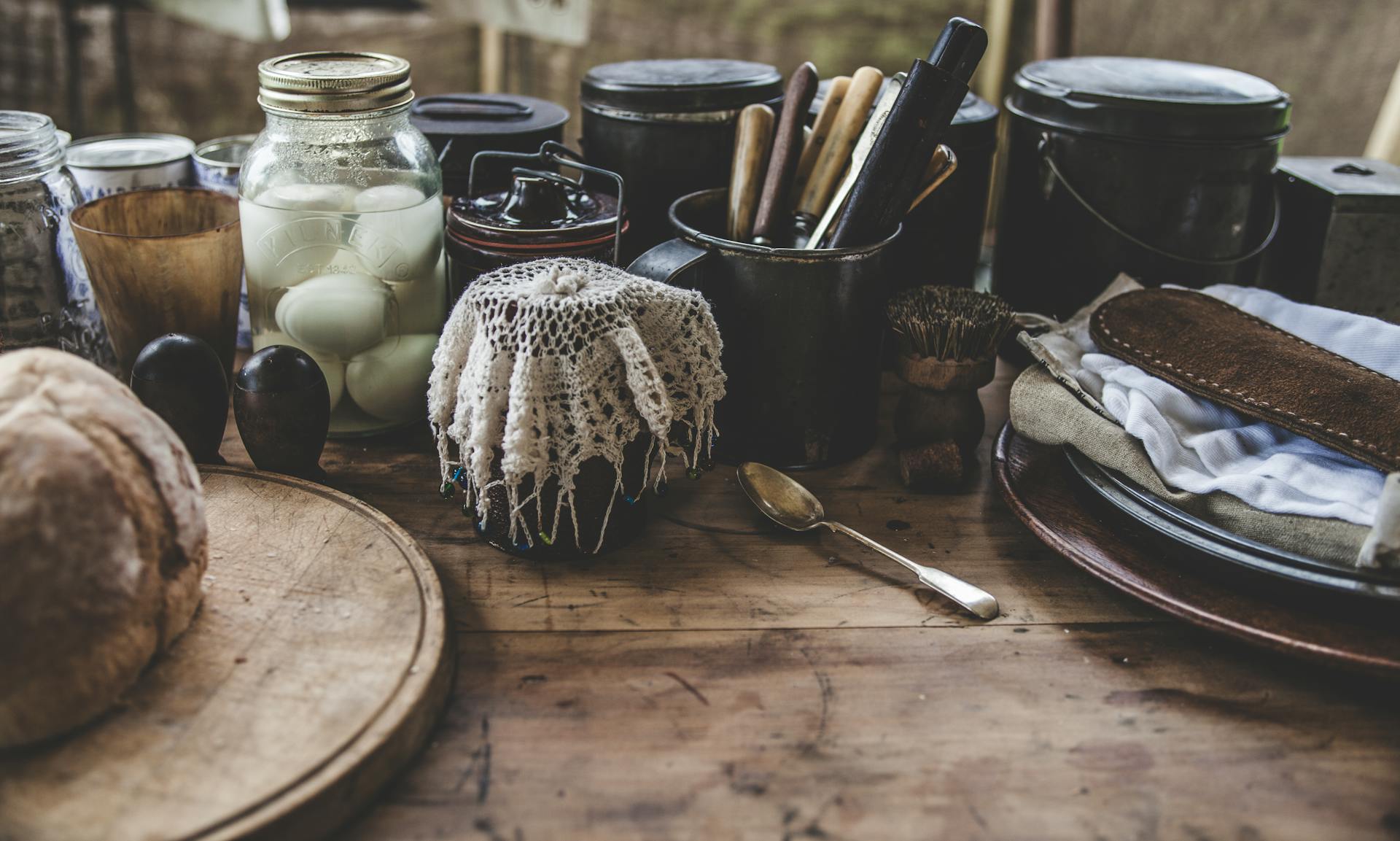
Many are still made with locally sourced ingredients using traditional methods — wooden barrels, natural fermentation, slow aging. And because of that, they often cost two to three times more than supermarket versions.
But once you taste them, they stop feeling expensive.
They start feeling underpriced.
Because you’re paying for things that don’t show up on a label:
- depth of flavour that industrial shortcuts can’t replicate
- trust in safety and ingredients
- time — the one resource nobody can manufacture
- the maker’s attention, repeated day after day
For a long time, I used clear rice vinegar without thinking. It was just “vinegar.” Then, one day, I bought black vinegar on a whim and used it in a simple vinegared dish (sunomono).
The difference was immediate: mellow, full-bodied, calm in a way I didn’t know vinegar could be. I didn’t just taste acidity — I tasted roundness.
That’s when I remembered hearing about something else: red vinegar.
I looked into it and discovered a place just an hour’s drive away where red vinegar is still made the traditional way.
That settled it. I had to go.
The Luxury of Time (and a One-Hour Drive)
In Japan, a “one-hour drive” can feel like a commitment. Not because it’s far, but because life is busy, schedules are tight, and time is always being spent somewhere else.
For me, though, the drive is part of the point. It’s time to talk with a partner, or time to think quietly alone. It’s a small act of choosing slowness.
On the road, you see impatient cars rushing past, drivers gripping the wheel like they’re wrestling time into submission. And it always makes me think:
Time flows the same for everyone — and one day it runs out.
So I ease off the gas and enjoy the journey. Savoring time makes life richer. Before I knew it, I arrived — at a renovated old storehouse with quiet dignity, the kind of building that still carries the shape of the past in its walls.
Inside, a young staff member greeted me with a warmth that made the whole place feel lighter. The shop had an impressive variety of sake; just reading labels and descriptions felt like wandering through stories.
And then I spotted it: a separate shelf with miso, fermented goods… and the red vinegar.
I picked up a bottle, chose a few intriguing sakes, and left feeling oddly uplifted — as if I’d bought more than ingredients. As if I’d bought a doorway back into a forgotten flavour.
A Taste Revived From the Edo Period
Most vinegar is made by fermenting grains or fruits into alcohol, then converting that alcohol into acetic acid through bacteria. Red vinegar follows the same broad logic — but the key ingredient makes it special:
sake lees (sake kasu) — the leftover solids after sake is filtered.
Sake is brewed from steamed japonica rice using koji mold to convert starches into sugars, which then ferment. After brewing, the liquid is strained — and what remains is the lees.
To make red vinegar, those lees are aged for about three years. After that, acetic acid bacteria are introduced, and the mixture ferments slowly over months.
The bottle I bought was produced without heavy machinery — relying on traditional methods and the quiet work of time and nature.
I tried a drop.
Delicious.
It tasted completely different from the rice vinegar I’d used for years, even though both begin with rice. Red vinegar’s acidity was clear but never sharp. There was a gentle sweetness. A softness on the tongue.
If regular vinegar is a triangle with sharp edges, red vinegar is a circle — smooth, rounded, complete. Maybe that’s what three years of aging does: it sands down the corners.
It’s often said that red vinegar contains nearly twice the amino acids of rice vinegar. I don’t need a lab report to believe it. The flavour has that unmistakable depth — the savoury “there’s more here” feeling.
So of Course: Sushi
Once I had red vinegar, the destination was obvious: sushi rice (shari).
Today, rice vinegar is standard. But historically, red vinegar was the traditional choice — especially in the era when nigiri sushi spread through Edo (1603–1868).
In that period, rice was precious — not only as food, but as the foundation of sake production. In 1804, Matazaemon Nakano (founder of Mizkan) developed a method for making vinegar from sake lees. Red vinegar was cheaper than rice vinegar and suited sushi rice beautifully, so it quickly became popular with Edo townspeople.
In other words: what we now associate with high-end sushi began as a smart, accessible solution — a working-class flavour that happened to be brilliant.
I made shari with red vinegar and shaped nigiri.
First bite: no soy sauce. Just fish and rice. The red vinegar’s soft acidity and mild sweetness lifted the topping gently rather than shouting over it. The rice felt like it melted.
Second bite: a touch of soy sauce. And suddenly everything clicked — salt amplifying umami, vinegar depth meeting the fish, harmony snapping into place like a chord resolving.
Once you taste something real, it’s hard to go back.
But that’s the fate of anyone who travels through food culture: you lose the ability to pretend the shortcut tastes the same. You don’t regret it — you just can’t un-know it.
Rare, Yet Weirdly Within Reach
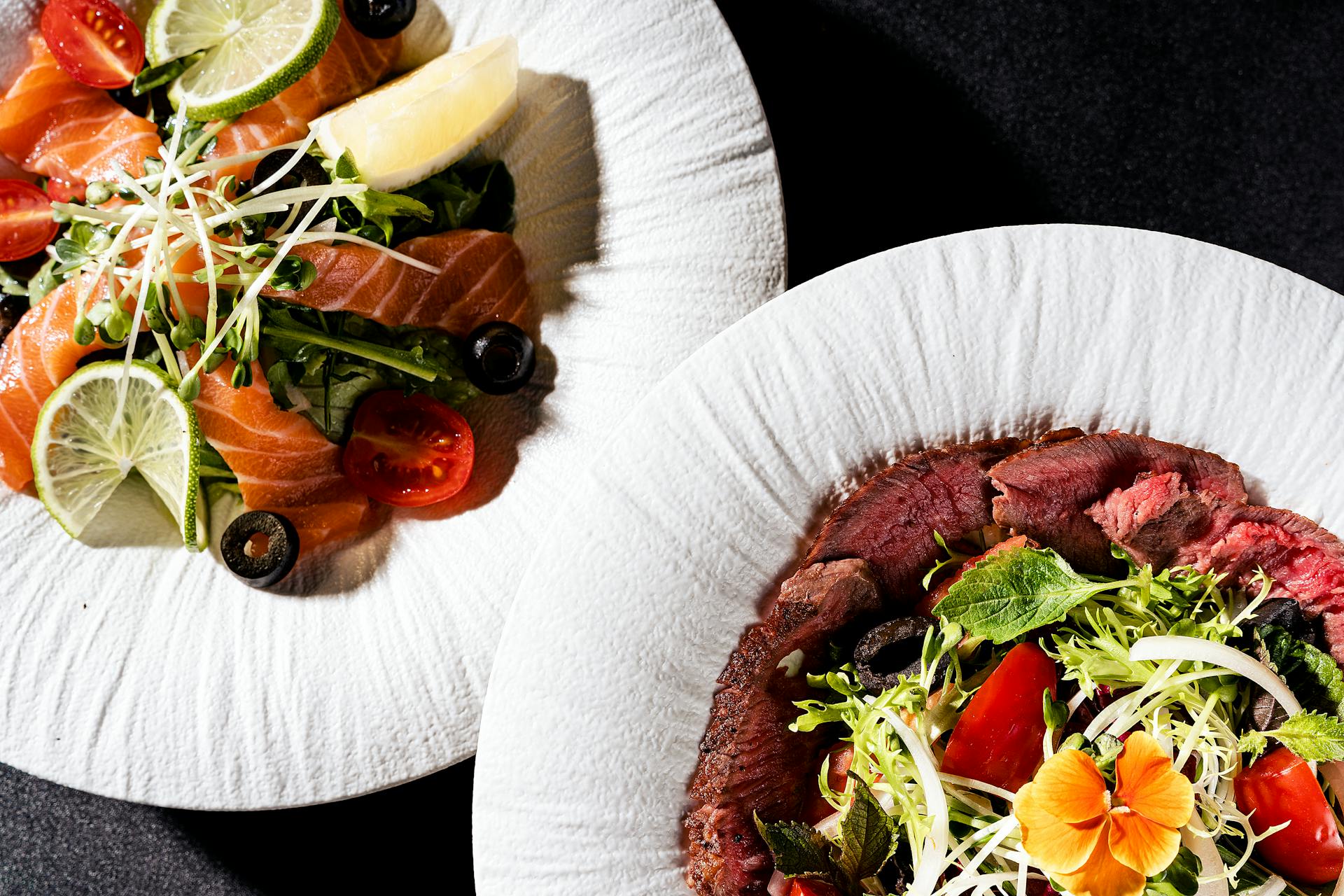
True red-vinegar sushi is rare now. It still appears in high-end sushi restaurants in Tokyo, but for most people it’s out of reach — especially as inflation pushes restaurant prices up. Even mid-range meals can feel expensive in a way they didn’t a few years ago.
And here’s the strange psychology: many people will pay a premium at a restaurant without hesitation, but hesitate to spend the same amount on ingredients or condiments for home.
Maybe it’s because supermarkets trained us to expect those items to be cheap. Maybe it’s because “a bottle of vinegar” doesn’t look like luxury the way a plated meal does.
But high-quality ingredients at home can be more economical long term — and often more satisfying. Not because it’s “fancier,” but because it returns you to an active role.
In the Edo period, sushi was simple. Red-vinegar nigiri was daily life. The townspeople of that era never imagined their everyday sushi would become a premium product.
Which raises a slightly haunting question:
What ordinary foods today will become luxury tomorrow?
And if that’s where we’re headed, what will “normal” meals look like in the future?
It’s a frightening thought. But it also clarifies something important.
Cooking as a Quiet Form of Power
That’s why cooking matters now more than ever.
Not as nostalgia. Not as performative tradition. But as a way to live as a creator, not only a consumer — to build richness into daily life even as the world pushes us toward cheaper, faster, more disposable food.
Because if the ordinary can become luxury… then maybe the real luxury is learning to make the ordinary taste extraordinary while we still can.

.jpg)